

Wafer scrap is one of the most expensive failure modes in semiconductor manufacturing. When inspection and metrology tools miss defects or go offline, entire batches can be lost before the problem surfaces. KLA systems address this by detecting defects early in the process flow, but their effectiveness depends on continuous uptime — which in turn hinges on spare parts availability.
Direct answer: KLA inspection and metrology tools reduce wafer scrap costs by identifying defects at the earliest possible stage, enabling process corrections before yield loss compounds across a production lot. The critical operational condition is maintaining tool uptime through reliable spare parts supply, especially for legacy systems.
Key takeaways on KLA tools and scrap cost reduction
- Wafer scrap stems from process drift, undetected defects, and inspection equipment downtime
- KLA metrology and inspection systems catch defects early, limiting yield loss across the lot
- Spare parts delays on legacy KLA equipment directly increase scrap risk by creating detection gaps
- Securing fast, compatible parts supply is a concrete lever for scrap prevention
What is wafer scrap and why does it weigh on manufacturing costs?
Wafer scrap refers to silicon wafers that fail to meet quality specifications and must be discarded during or after fabrication. The direct cost includes the raw wafer value and all processing steps already invested. The indirect costs — lost throughput capacity, delayed customer shipments, and disrupted production scheduling — frequently exceed the direct loss, particularly at advanced technology nodes where each wafer carries significant added value.
The root causes fall into three categories: process drift pushing critical dimensions out of tolerance, particle or pattern defects introduced during lithography and etch steps, and equipment downtime creating gaps in inspection coverage. According to the ITRS Yield Enhancement chapter published by SEMI, determining defects and correlating them with yield impact is essential for any manufacturing yield improvement strategy.
$836,800/year
Estimated annual loss from unplanned SubFab equipment events at a single batch furnace, including $750,000 in scrapped wafer value (Edwards Vacuum case study).
The financial scale is concrete. In a documented foundry case, unplanned equipment failures in the sub-fab environment generated an estimated $836,800 in annual losses, of which $750,000 was attributed directly to scrapped wafer value, according to an Edwards Vacuum case study on batch wafer loss prevention. A single pump failure during a batch process was enough to scrap an entire lot of up to 125 wafers.
This is why metrology and inspection accuracy — and the uptime of the tools delivering it — sits at the center of scrap cost control.
How KLA metrology and inspection systems help prevent wafer scrap
KLA metrology and inspection systems reduce scrap by closing the feedback loop between defect detection and process correction. When a wafer passes through a KLA inspection tool, surface and sub-surface defects are identified and classified before the wafer advances to the next process step. If a defect pattern signals process drift, the fab can adjust equipment parameters immediately rather than discovering the problem after an entire lot has been processed.
For fabs operating KLA semiconductor inspection and metrology platforms, the operational priority is keeping measurement accuracy within specification at all times. A review of dimensional metrology methods by researchers at the National Institute of Standards and Technology, published in Nature Electronics, confirms that techniques such as scatterometry, CD-SAXS, and advanced SEM remain critical for detecting dimensional deviations in advanced integrated circuits.
The process control loop operates in three stages: inspection detects the defect, metrology quantifies the deviation, and yield learning correlates the finding with its root cause. When all three stages run continuously, scrap rates stay within target. When a tool goes offline, the loop breaks and defects that would have been caught at an early step accumulate undetected through subsequent processing stages.
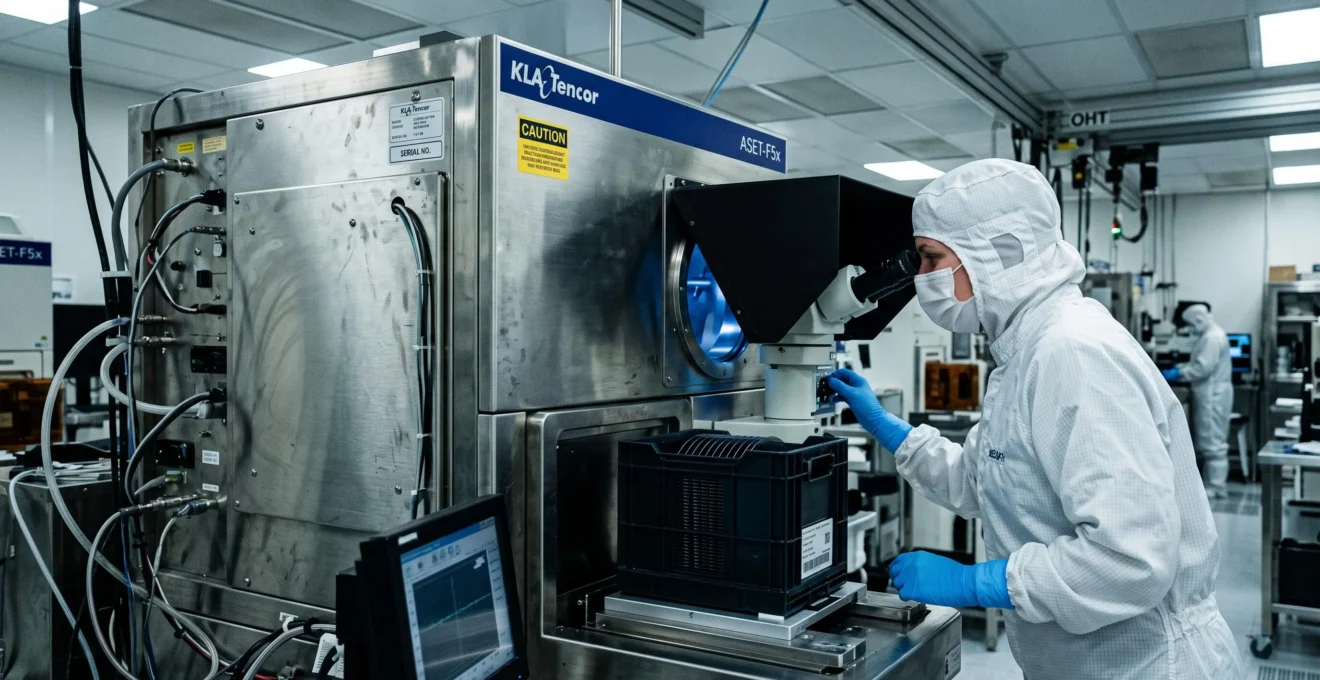
This makes equipment uptime not just a maintenance metric but a direct scrap-prevention variable. Every hour a KLA inspection tool spends offline is an hour during which defective wafers may pass through the line unflagged, compounding the eventual scrap cost.
The hidden cost of spare parts downtime on legacy KLA tools
Many fabs continue to run legacy KLA inspection and metrology tools well past their original support window because these systems remain embedded in qualified process flows. Requalifying a replacement tool can take months and cost significantly more than maintaining the existing platform. The challenge is that spare parts for older KLA systems become progressively harder to source through standard OEM channels as the manufacturer shifts engineering and logistics resources toward newer product lines.
When a critical component — a laser module, a detector board, a stage controller — fails on a legacy KLA tool, the wait for a replacement can stretch from days to several weeks. During that window, the inspection coverage gap means wafers flow through the line without the defect detection the process was qualified to rely on. The result is a rising probability that defective wafers reach later fabrication stages, where the cost of scrapping them is multiplied by the processing value already added.
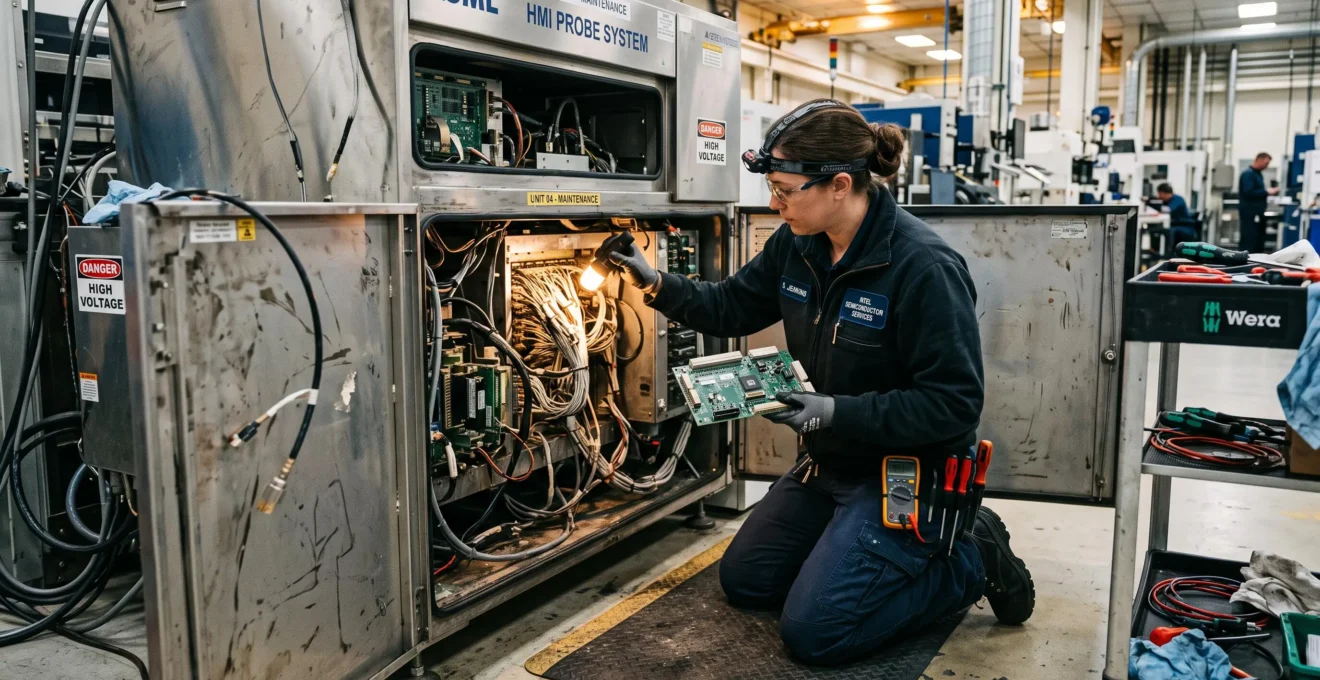
Inspection gaps compound silently: A two-week downtime on a critical KLA inspection node can allow defective wafers to accumulate across multiple lots before the root cause is identified, turning a localized tool failure into a line-wide yield loss event.
The cost chain is straightforward: spare parts delay extends downtime, downtime breaks inspection continuity, and the resulting detection gap increases undetected defect rates. For a production line processing thousands of wafers per day, even a short gap in inspection coverage on a critical node can translate into significant yield loss that would have been preventable with faster parts availability.
How to secure spare parts supply for KLA semiconductor equipment
Reducing scrap costs through better equipment maintenance starts with securing a reliable spare parts supply chain for KLA tools. The selection criteria should focus on three factors: lead time for critical components, documented quality assurance and compatibility with the specific tool model, and traceability of parts back to verified manufacturing sources.
For legacy and obsolete KLA systems, alternative suppliers specializing in semiconductor equipment parts can often deliver components faster than traditional OEM channels while maintaining OEM-equivalent quality standards. The key is verifying that the supplier tests and validates parts against original specifications rather than simply reselling untested inventory. Compatibility guarantees and return policies for non-functioning parts should be confirmed before committing to a sourcing relationship.
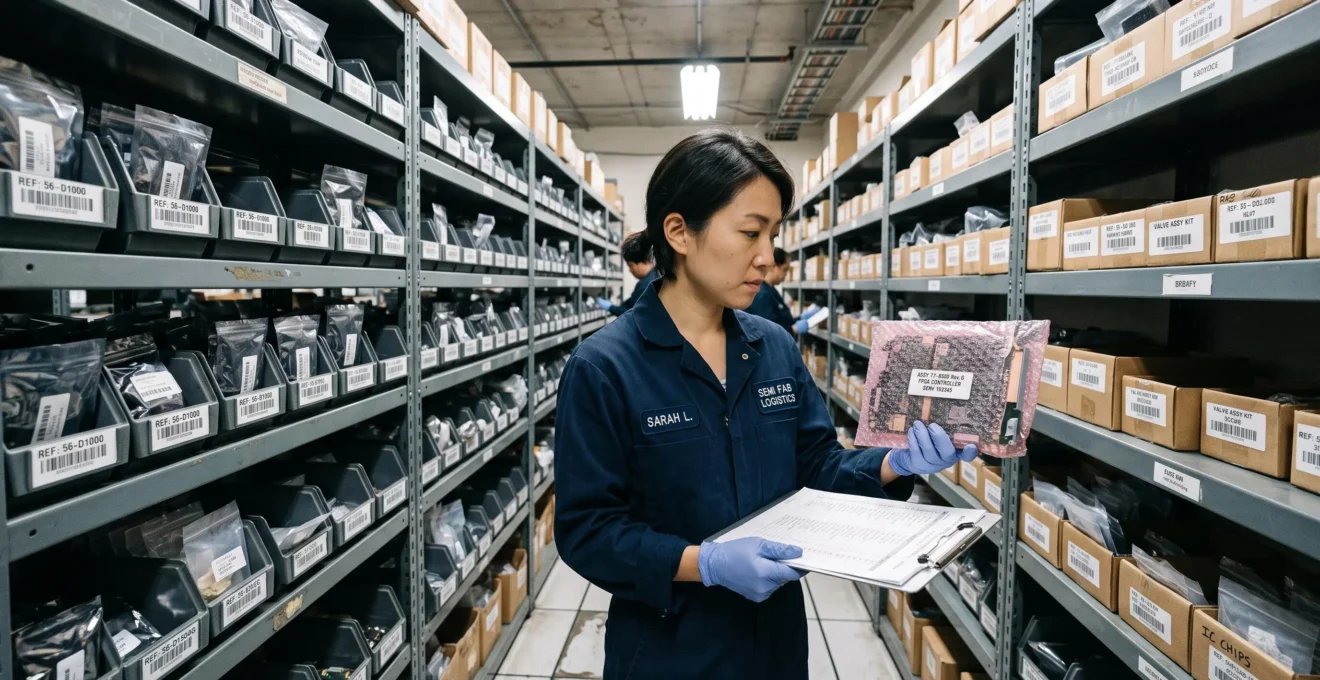
Building a critical spare parts inventory is the second lever. Identifying the components most likely to fail on each KLA tool in the fleet — based on historical failure data and mean time between failures — allows maintenance teams to stock high-risk parts on-site. This proactive approach converts a potential multi-week downtime event into a same-day repair, preserving inspection continuity and preventing the scrap accumulation that follows extended tool outages.
Supplier reliability directly affects scrap rates because it determines how quickly inspection and metrology tools return to full operation after a failure. When choosing between sourcing options, the decision should weigh the total cost of downtime — including the scrap risk during the gap — against the unit price of the part itself. A lower-cost part that arrives three weeks late can cost far more in lost wafers than a slightly more expensive part delivered within 48 hours.
FAQ: reducing wafer scrap costs with better equipment maintenance
How does equipment uptime impact wafer scrap rates?
Equipment uptime determines whether inspection and metrology tools are actively monitoring the production line. When a KLA inspection tool is offline, defects that would normally be caught and flagged pass through undetected, increasing the probability that entire lots must be scrapped at later stages. Maintaining high uptime through preventive maintenance and fast spare parts availability is one of the most direct levers for keeping scrap rates low.
Are non-OEM spare parts reliable for KLA inspection tools?
Non-OEM spare parts can be reliable when sourced from suppliers that test and validate components against original KLA specifications. The critical factors are documented quality assurance, model-specific compatibility verification, and part traceability. Fabs should request test reports and compatibility guarantees before integrating alternative parts into qualified tool configurations, particularly for metrology-critical components where measurement accuracy is non-negotiable.
When should a fab keep maintaining legacy KLA tools versus upgrading?
The decision depends on the tool’s role in the qualified process flow, the cost and timeline of requalification for a replacement system, and the availability of spare parts. If a legacy KLA tool remains critical to a production node and requalification would take months, maintaining it with a secured parts supply is typically more cost-effective than upgrading. The upgrade path becomes preferable when parts availability drops to a level where chronic downtime creates unacceptable scrap risk.
Reducing wafer scrap costs is ultimately a chain: reliable spare parts keep KLA inspection and metrology tools running, running tools detect defects early, and early detection prevents yield loss from compounding into full-lot scrap. The most effective starting point for any fab is auditing its spare parts lead times against the actual scrap cost generated during tool downtime — and closing the gap where the numbers do not align.